
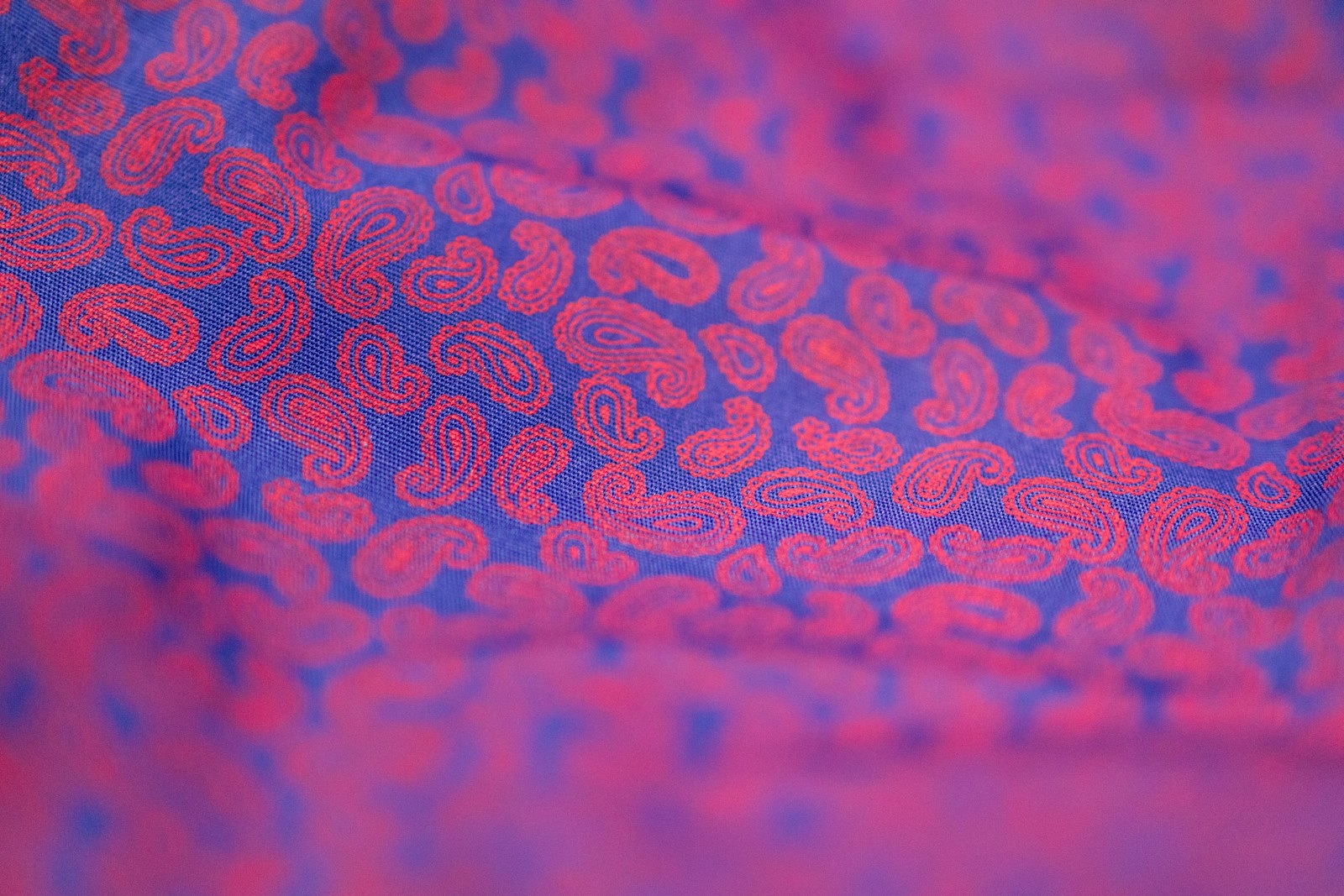
The paisley motif represents one of the most recognizable decorative patterns in textile history, characterized by its distinctive curved teardrop shape with intricate internal details. This iconic design element has transcended centuries and cultures, evolving from ancient Persian and Indian artistry into a global symbol of fashion and style. Understanding what paisley truly encompasses requires exploring its rich historical background, examining its visual characteristics, and appreciating its profound impact across different societies and time periods.
The ancient roots and historical evolution of the paisley design
The paisley pattern originated in ancient Persia, where it first appeared as a decorative motif called boteh jegheh or simply boteh. This original design represented either a cypress tree, a flowering bush, or a stylized pine cone, all symbols deeply rooted in Zoroastrian traditions. The pattern held spiritual significance for Persian cultures, representing life, eternity, and regeneration through its organic flowing form.
During the Safavid dynasty in Persia and the Mughal Empire in India, artisans refined this design through elaborate textile production. Indian weavers in Kashmir transformed the motif into intricate shawl patterns using expensive pashmina wool, creating luxurious garments that became highly sought after by European aristocracy. These Kashmir shawls took months or even years to complete, with skilled craftsmen weaving elaborate paisley designs that showcased extraordinary technical mastery and artistic vision.
The design reached Scotland in the early 19th century when textile manufacturers in the town of Paisley began reproducing these exotic patterns. The Scottish town gave its name to the design, as local weavers used jacquard looms to mass-produce affordable versions of the expensive Kashmir shawls. This democratization of the pattern transformed it from an elite luxury into an accessible fashion element, spreading its popularity throughout Europe and eventually worldwide. By the 1850s, Paisley had become Europe’s primary production center for these textiles, cementing the pattern’s association with the town.
Distinctive visual characteristics and pattern variations
The paisley design features a curved teardrop shape with a rounded end and a tapered point, often compared to a kidney bean, mango, or elongated droplet. The pattern typically includes elaborate internal decorations featuring floral motifs, geometric elements, or abstract designs that create visual complexity within the basic teardrop form. These intricate details distinguish authentic paisley from simpler decorative patterns.
Common variations of the paisley motif include several distinctive styles :
- Traditional Persian paisley with flowing, organic curves and botanical elements
- Indian paisley variations featuring more ornate internal patterns and vibrant color combinations
- Modern simplified versions with streamlined shapes and minimal internal decoration
- Psychedelic paisley designs popularized during the 1960s with bold colors and exaggerated forms
The color palette of paisley patterns varies significantly across different cultural contexts and historical periods. Traditional designs often featured rich jewel tones including deep reds, blues, golds, and greens, reflecting the natural dyes available to ancient textile artisans. Contemporary paisley incorporates diverse color schemes, from monochromatic minimalist approaches to vibrant multi-colored compositions that showcase modern design sensibilities while maintaining the classic teardrop structure.
| Era | Typical colors | Common applications |
|---|---|---|
| Ancient Persian | Earth tones, indigo, madder red | Royal garments, ceremonial textiles |
| Victorian era | Deep burgundy, forest green, gold | Shawls, waistcoats, home furnishings |
| 1960s revival | Bright orange, purple, psychedelic combinations | Shirts, scarves, upholstery |
| Contemporary | Varied, including pastels and neutrals | Fashion accessories, interior design, digital media |
Cultural significance across civilizations and artistic movements
Throughout history, the paisley pattern has carried profound symbolic meanings across different cultures. In Persian tradition, the boteh represented fertility and life’s cyclical nature, while Indian interpretations connected the design to spiritual concepts of eternity and cosmic balance. The pattern’s association with luxury and social status persisted for centuries, as ownership of genuine Kashmir shawls indicated wealth and refined taste among European elites.
The pattern experienced remarkable resurgence during the 1960s counterculture movement, when musicians like The Beatles and fashion designers embraced paisley as a symbol of bohemian lifestyle and artistic rebellion. This era transformed paisley from a traditional Victorian aesthetic into a representation of progressive values, creativity, and non-conformity. Rock musicians wore paisley shirts and scarves on stage, while interior designers incorporated the pattern into psychedelic visual environments that defined the decade’s artistic expression.
Contemporary fashion continues embracing paisley across diverse applications, from haute couture runway collections to streetwear brands seeking vintage-inspired aesthetic appeal. Designers like Etro have built entire brand identities around paisley patterns, demonstrating its enduring commercial viability. The motif appears in neckties, pocket squares, dresses, and accessories, adapting to modern minimalist sensibilities while retaining its historical decorative essence. Beyond fashion, paisley influences graphic design, digital art, and architectural decoration, proving its versatility as a visual element that transcends specific cultural contexts or temporal limitations.