
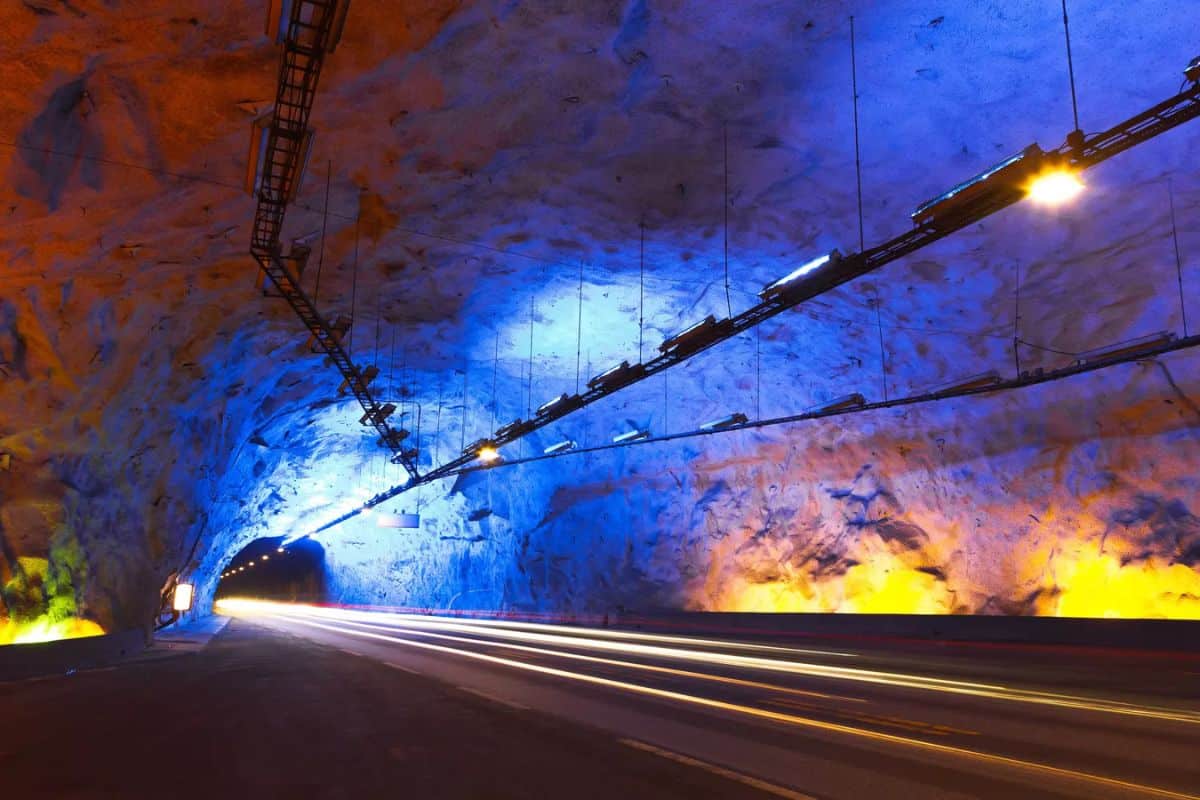
Norway is preparing to revolutionize transportation along its western coast with an unprecedented engineering feat. The Scandinavian nation, known for its dramatic fjords and challenging geography, has embarked on constructing the deepest underwater tunnel ever built. This ambitious infrastructure project will fundamentally transform how people and goods traverse the country’s rugged coastal landscape.
An engineering marvel beneath the Norwegian seabed
The Rogfast tunnel represents a groundbreaking achievement in subsea infrastructure development. Stretching an impressive 27 kilometers beneath the waves, this underwater passage will connect the districts of Randaberg and Bokn. What makes this project truly exceptional is its unprecedented depth : the tunnel will be carved through solid rock formations located 400 meters below sea level, establishing a new world record for undersea road construction.
The infrastructure will feature four traffic lanes, allowing vehicles to travel safely through this subterranean route for approximately 35 minutes without any exits. Engineers have designed this passage to accommodate all types of vehicles, from personal cars to heavy commercial trucks. The construction, which initially launched in 2018, faced significant delays due to the global health crisis that disrupted supply chains and workforce availability across Europe. Despite these setbacks, the project is now firmly on track toward its completion date.
Financial investment in this venture ranges between 1.6 and 2 billion euros, reflecting the complexity and scale of drilling through underwater bedrock at such extreme depths. The technical challenges involved in maintaining structural integrity under immense pressure while ensuring ventilation and safety systems function flawlessly have required innovative solutions from Norwegian engineers and international specialists collaborating on the project.
Transforming coastal connectivity across western Norway
Norway’s distinctive geography, characterized by numerous deep fjords, has historically fragmented the country’s transportation network. These narrow, steep-sided inlets created by glacial activity during the last ice age present substantial obstacles for road construction. Currently, travelers attempting to journey from Trondheim in central Norway to Kristiansand in the south via the coastal route along Highway E39 face an arduous 21-hour ordeal.
This exhausting journey requires passengers and drivers to board seven separate ferry services, each adding waiting times, scheduling constraints, and weather-dependent uncertainties to the trip. The repeated transitions between land and water transportation create bottlenecks that particularly affect commercial freight operations, increasing costs and reducing efficiency for businesses dependent on reliable delivery schedules.
| Route characteristic | Current situation | After Rogfast completion |
|---|---|---|
| Total travel time | 21 hours | 10 hours |
| Ferry crossings required | 7 ferries | 0 ferries |
| Time savings | N/A | 11 hours |
The Rogfast tunnel will eliminate these maritime crossings entirely, creating an uninterrupted road connection that reduces the Trondheim-Kristiansand journey to just ten hours. This dramatic reduction in travel time will fundamentally alter logistics planning for commercial operators and make the scenic western coast significantly more accessible for tourism development.
Economic implications and regional development opportunities
Norwegian authorities envision multiple strategic benefits from this infrastructure investment. The primary objectives include streamlining commercial freight transportation and stimulating tourism along the spectacular western coastline. Businesses currently hampered by ferry schedules and unpredictable weather conditions will gain operational flexibility and cost predictability.
According to information from transportation analysts, the toll for traversing the tunnel will be approximately 38 euros per vehicle. While this may seem substantial, users will realize significant overall savings by avoiding multiple ferry fares, which cumulatively exceed the tunnel toll. Additionally, the time savings translate directly into reduced labor costs for commercial drivers and increased productivity for businesses.
The completion of Rogfast forms part of a larger vision to upgrade Highway E39 into a continuous ferry-free corridor along Norway’s western edge. This strategic transportation artery will enhance regional economic integration, allowing communities previously isolated by geographical barriers to participate more fully in national commerce and cultural exchange. The following benefits are anticipated :
- Enhanced reliability for temperature-sensitive cargo requiring predictable delivery schedules
- Increased competitiveness for western Norwegian businesses accessing southern markets
- Expanded tourism opportunities showcasing fjord landscapes and coastal attractions
- Reduced carbon emissions compared to multiple ferry crossings powered by marine diesel
- Improved emergency services response times across district boundaries
Timeline and future prospects for Norwegian infrastructure
Construction teams are working steadily toward the projected completion date of 2033. When operational, Rogfast will claim the title of the world’s longest subsea road tunnel, surpassing the 24-kilometer Laerdal tunnel, which Norway also operates. This achievement underscores the Scandinavian nation’s leadership in advanced tunnel engineering and willingness to undertake ambitious projects that overcome natural obstacles.
Visitors planning to experience Norway’s magnificent landscapes should note that accessing this engineering wonder requires patience until the early 2030s. However, once operational, the tunnel will offer travelers an unprecedented opportunity to witness human ingenuity while enjoying continuous access to some of Europe’s most breathtaking scenery along the reimagined coastal highway.
The legacy of this project extends beyond immediate transportation benefits. It demonstrates how strategic infrastructure investment can reshape regional development patterns, connecting communities separated by natural barriers and creating economic opportunities in areas previously constrained by geographical limitations inherent to this former Viking territory.